
Collecting
What estate sales never deliver
A collector in Aspen discovered six months after an estate sale that the painting on her wall had been returned in 2019 by a neighbor down the road. A note from the atelier on what estate frames actually deliver, what they cannot, and why a second home is the room in which the difference matters most.
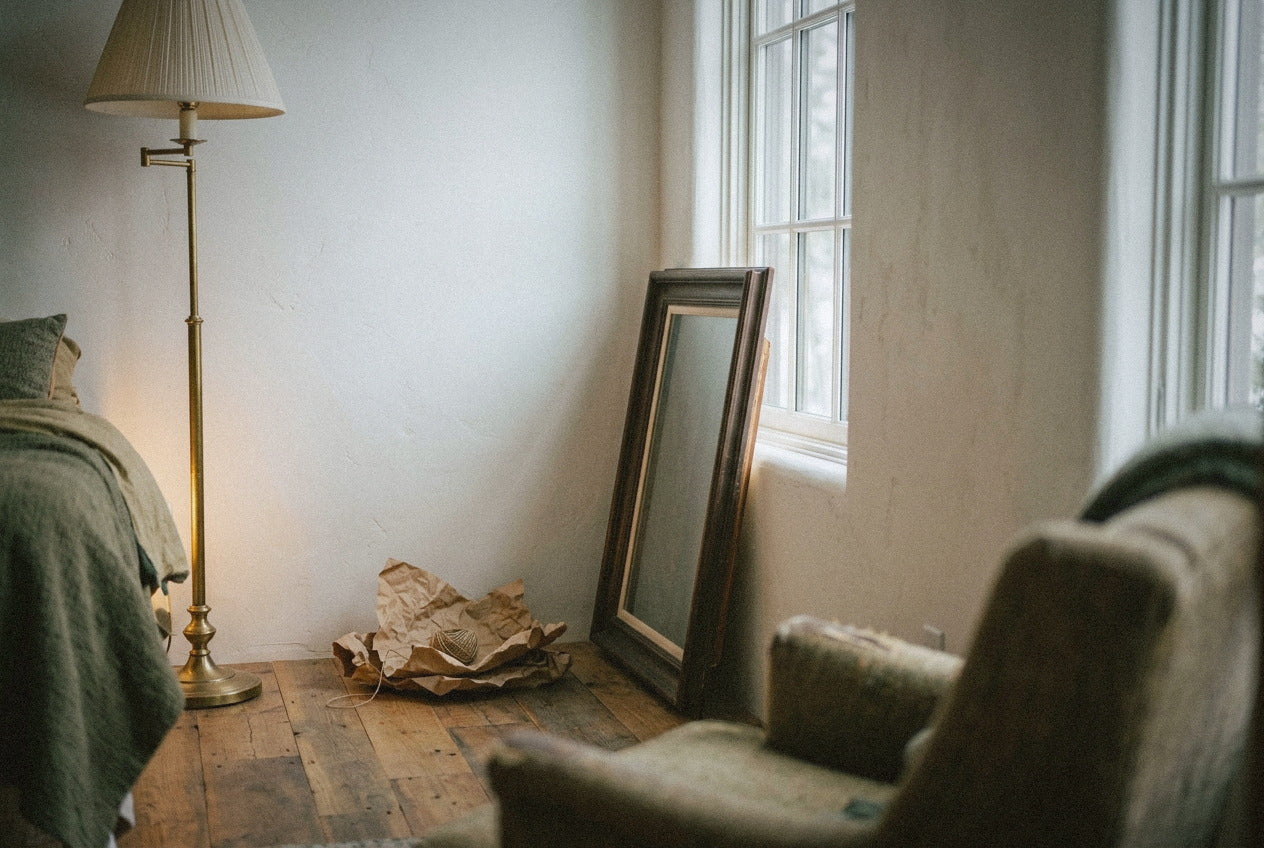
A collector in Aspen acquired a small oil painting at an estate sale in early January. It was signed, it was framed, it had a catalog note, it was the right size for the wall opposite the window in the upstairs sitting room. Six months later she wrote to me because a neighbor had recognized the painting. Not because the neighbor had admired it. Because the neighbor had returned it in 2019.
The problem with other people's walls
Estate sales are wonderful for books, for brass, for the kind of silverware nobody polishes anymore. They are also the single most seductive place for a second-home collector, because everything has the gloss of a story that happened before you arrived, and the price is, on paper, reasonable.
What the price does not include is the history of the wall. A painting that ends up at an estate sale has often been on three or four walls before yours. It has been bought, returned, rehung, regifted, and in more cases than you would guess, it was already in one other house in your town before it reached you. A small art community recognizes its own paintings. A neighbor will not always tell you; she will simply know.
There is a reason this matters more for a second-home collector than for any other buyer. The first home carries its own history. The art in it can contain traces of other places and other lives, and the house absorbs them. The second home, by contrast, is supposed to be the room without the history. The beach, the mountain, the valley, the first weeks of a year away from the usual. A painting that arrives there already carrying other people's wall life is a soft failure of what the second home was supposed to be.
What I have seen come out of estate frames
Of the twelve paintings I have personally looked at for second-home collectors in the last five years, after they acquired them at an estate sale, nine had been re-varnished to disguise tonal drift, three had been relined, and eleven had no documentation beyond a hand-written note from the consignor. None of this makes the painting wrong. It makes the story of the painting other than what it was sold as.
More importantly for the collector who is not trying to build a collection, who is trying to finish one specific room, the estate painting carries residual decisions. The frame was someone else's decision. The scale was someone else's decision. The subject was someone else's decision. Even the varnish was someone else's decision. By the time the painting arrives at the second house, you are making one decision, about the wall, inside six that were already made.
An estate painting is a finished conversation you are walking into late.
What a commission can deliver that an estate sale cannot
A commissioned original, made now for a specific wall in your second home, inverts the calculus. You decide the scale before the canvas is primed. You decide the tonality by responding to light photos from that specific room at that specific hour. You decide whether the painting should quiet the room or wake it up. The frame, if you choose one, is selected against the stretcher bars in your eye, not in someone else's 1988 taste.
I can tell you the exact day a commissioned painting is stretched, primed, started, adjusted, finished, varnished, and shipped. I can tell you what the weather was like outside the studio window on each of those days. The weather of the painting is part of the painting. An estate sale provides none of this, because the day-by-day history of the work has been lost with the three or four previous owners. You inherit a stranger. A commission introduces itself.
The painting that results has one provenance, and it begins with you. It ends, in most cases, on the one wall in the house that nobody decorates for guests. A generation from now, when the second home is being looked at by the next owner, the painting will not have been returned three times. It will not have been hung on a wall in the same town, and quietly walked past by a neighbor, a decade before it arrived at yours. It will have one wall, one room, one story, and that story will be the one you are living in now.
The small freedom of starting clean
The Aspen collector and I spoke for a long time about what to do with the estate painting. She ended up keeping it, on a different wall, in a smaller room, and the wall opposite the window in the sitting room is now holding a commission that was finished in March. The neighbor has not recognized that one. She would not have.
A second home should not feel like a secondhand home. The cost of a painting made for a specific wall is almost always less than the cost of the social friction of a painting that three other people in your town have lived with first.
Share this story
Continue reading

